


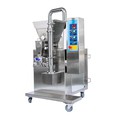
As a supplier of the RM35 ice cream production line, I often receive inquiries from potential customers about the ability of our equipment to produce ice cream with a long shelf - life. In this blog post, I'll delve into the factors that influence ice cream shelf - life and explain how the RM35 line can contribute to creating ice cream products that stay fresh for an extended period.
Understanding Ice Cream Shelf - Life
The shelf - life of ice cream is determined by a variety of factors, including ingredients, processing methods, packaging, and storage conditions. Ice cream is a complex colloid system composed of water, milk fat, milk solids - not - fat, sweeteners, emulsifiers, stabilizers, and flavorings. Each component plays a role in the product's stability and longevity.
Ingredients
- Milk Fat: Higher milk fat content generally leads to a richer and creamier ice cream. Fat globules can form a protective layer around ice crystals, preventing them from growing and coalescing during storage. This helps maintain the smooth texture of the ice cream over time. However, milk fat is also susceptible to oxidation, which can cause off - flavors and shorten the shelf - life if not properly protected.
- Stabilizers and Emulsifiers: Stabilizers such as guar gum, carrageenan, and xanthan gum help to bind water molecules, prevent ice crystal formation, and improve the overall texture and stability of the ice cream. Emulsifiers, like mono - and diglycerides, help to disperse the fat phase evenly throughout the mixture, preventing fat globules from clumping together. These additives can significantly extend the shelf - life of ice cream by maintaining its physical properties.
- Sweeteners: Sweeteners not only add flavor but also lower the freezing point of the ice cream mixture. This means that the ice cream remains softer at freezer temperatures and can resist the formation of large ice crystals. However, some sweeteners, such as high - fructose corn syrup, can be more prone to Maillard reactions, which can lead to color and flavor changes over time.
Processing Methods
- Pasteurization: Pasteurization is a crucial step in ice cream production that kills harmful bacteria and extends the product's shelf - life. The RM35 ice cream production line is equipped with advanced pasteurization equipment that can effectively heat - treat the ice cream mixture to the appropriate temperature and time, ensuring product safety and stability.
- Homogenization: Homogenization breaks down the fat globules in the ice cream mixture into smaller, more uniform particles. This prevents the fat from separating and rising to the surface, resulting in a smoother and more stable product. The RM35 line uses high - pressure homogenizers to achieve optimal homogenization, which contributes to the long - term quality of the ice cream.
- Freezing: The rate of freezing also affects the shelf - life of ice cream. Rapid freezing helps to form small ice crystals, which are less likely to grow and cause texture problems during storage. The RM35 ice cream production line features efficient freezing equipment that can quickly lower the temperature of the ice cream mixture to the desired level, ensuring a fine and smooth texture.
Packaging
- Airtight Containers: Packaging plays a vital role in protecting ice cream from air, light, and moisture, which can all contribute to spoilage. The RM35 line can be integrated with various packaging systems, including airtight containers and wrappers, to provide a barrier against external factors and extend the shelf - life of the ice cream.
- Light - Resistant Materials: Exposure to light can cause the breakdown of certain components in ice cream, such as vitamins and pigments, leading to color and flavor changes. Using light - resistant packaging materials can help to minimize these effects and maintain the quality of the product over time.
Storage Conditions
- Temperature: Ice cream should be stored at a consistent, low temperature to prevent ice crystal growth and maintain its texture. The ideal storage temperature for ice cream is around - 18°C (- 0.4°F). Fluctuations in temperature can cause the ice cream to thaw and refreeze, resulting in the formation of large ice crystals and a loss of quality. The RM35 ice cream production line is designed to produce ice cream that can withstand normal temperature variations during storage and transportation.
How the RM35 Ice Cream Production Line Contributes to Long Shelf - Life
The RM35 ice cream production line is a state - of - the - art system that combines advanced technology and high - quality components to produce ice cream with excellent shelf - life characteristics.
Precise Ingredient Control
The RM35 line allows for precise control of ingredient proportions, ensuring that the right amount of stabilizers, emulsifiers, and other additives are used to optimize the ice cream's stability. This helps to prevent ice crystal formation, maintain the texture, and extend the shelf - life of the product.


Efficient Processing
With its advanced pasteurization, homogenization, and freezing equipment, the RM35 line ensures that the ice cream is processed under optimal conditions. This not only kills harmful bacteria but also creates a fine and uniform structure that resists degradation over time.
Customizable Packaging Options
As mentioned earlier, the RM35 line can be integrated with a variety of packaging systems. Customers can choose the most suitable packaging materials and designs to protect their ice cream products from external factors and extend their shelf - life.
Case Studies
To illustrate the effectiveness of the RM35 ice cream production line in producing ice cream with a long shelf - life, let's look at some real - world examples.
A small - scale ice cream manufacturer in Europe purchased an RM35 ice cream production line to expand their product range. They were particularly interested in producing ice cream products that could be distributed to remote areas with limited refrigeration facilities. By using the RM35 line, they were able to produce ice cream with a shelf - life of up to 6 months under proper storage conditions. The precise ingredient control and efficient processing of the RM35 line helped to maintain the quality and texture of the ice cream, even during long - distance transportation.
Another customer, a large - scale ice cream producer in Asia, was facing issues with ice crystal formation and short shelf - life in their existing products. After switching to the RM35 ice cream production line, they noticed a significant improvement in the quality and stability of their ice cream. The advanced freezing technology of the RM35 line helped to form smaller ice crystals, resulting in a smoother texture and a longer shelf - life.
Conclusion
In conclusion, the RM35 ice cream production line is capable of producing ice cream with a long shelf - life. Through precise ingredient control, efficient processing methods, and customizable packaging options, it addresses the key factors that influence ice cream stability and longevity.
If you are interested in learning more about the RM35 ice cream production line or would like to discuss your specific ice cream production needs, please feel free to [initiate a conversation with us]. Our team of experts is ready to provide you with detailed information and support.
You can also explore more about our products through the following links:
RM35 Industrial Popsicle Making Machine
RM35 Ice Cream Production Line
RM35 Stick Ice Cream Machine
References
- Marshall, R. T., & Arbuckle, W. S. (2008). Ice Cream. Springer.
- Goff, H. D., & Hartel, R. W. (2013). Ice Cream (7th ed.). Springer.
- Heldman, D. R., & Hartel, R. W. (1997). Principles of Food Processing. Aspen Publishers.