


Hey there! As a supplier of ice cream extruders, I often get asked, "Do ice cream extruders work with all types of ice cream mixes?" Well, let's dive right into this topic and find out.
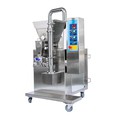
First off, what exactly is an ice cream extruder? It's a machine that helps shape and form ice cream into various sizes and shapes. Our EX800 Ice Cream Extruder Machine is a great example. It's designed to handle the extrusion process efficiently, turning your ice cream mix into those delicious treats we all love.
Now, not all ice cream mixes are created equal. There are different types based on their ingredients, viscosity, and intended final product. Let's start by looking at the common types of ice cream mixes.
Types of Ice Cream Mixes
1. Traditional Dairy - Based Mixes
These are the classic ice cream mixes made with milk, cream, sugar, and sometimes eggs. They have a rich and creamy texture. Most ice cream extruders, including our EX800 Ice Cream Extruder, work really well with these mixes. The consistency of dairy - based mixes is usually ideal for extrusion. The fat content in the milk and cream gives the mix a certain plasticity, allowing it to be easily pushed through the extruder's nozzles to form different shapes like bars, tubes, or spirals.
2. Non - Dairy Mixes
With the growing demand for vegan and lactose - free options, non - dairy ice cream mixes have become popular. These are typically made from ingredients like soy milk, almond milk, coconut milk, or cashew milk. The viscosity of non - dairy mixes can vary quite a bit. Some coconut - based mixes can be thick and rich, similar to dairy mixes, while others, like those made from almond milk, might be thinner.
In general, our ice cream extruders can handle many non - dairy mixes. However, the thinner ones might require some adjustments. For example, we might need to slow down the extrusion speed or use a different nozzle size to ensure a proper shape is formed. Our EX800 Ice Cream Extrusion Line has some adjustable settings that can be tweaked to accommodate these variations.
3. Gelato Mixes
Gelato is similar to ice cream but has a lower fat content and a higher proportion of milk to cream. It also has a denser texture compared to traditional ice cream. Gelato mixes can be a bit more challenging to extrude because of their density. But our extruders are up for the task. The design of the EX800 Ice Cream Extruder allows for enough pressure to be applied to push the dense gelato mix through the nozzles smoothly.
4. Sorbet Mixes
Sorbet is made mainly from fruit puree, sugar, and water, with no dairy. It has a very different texture compared to ice cream and gelato. Sorbet mixes are usually thinner and more liquid - like. While our ice cream extruders can work with sorbet mixes, it's important to note that the extrusion process might be a bit different. We might need to use a cooling system during extrusion to prevent the sorbet from melting too quickly. Also, the shapes formed might not be as well - defined as with thicker ice cream mixes.
Factors Affecting Compatibility
1. Viscosity
As mentioned earlier, viscosity plays a huge role in how well an ice cream mix can be extruded. A mix that is too thick might clog the extruder, while a mix that is too thin might not hold its shape. Our extruders are designed to handle a wide range of viscosities, but extreme cases might require some modifications. For very thick mixes, we can increase the pressure in the extruder, and for thin mixes, we can adjust the flow rate.
2. Particle Size
Some ice cream mixes might contain small particles like nuts, chocolate chips, or fruit chunks. These particles can affect the extrusion process. If the particles are too large, they might get stuck in the extruder's nozzles. Our extruders have a design that can handle moderately sized particles, but for mixes with very large particles, we might need to use a pre - filtering system or a special nozzle design.
3. Temperature
The temperature of the ice cream mix is crucial. If the mix is too warm, it will be too soft and might not hold its shape during extrusion. On the other hand, if it's too cold, it will be too hard and difficult to push through the extruder. We recommend that the mix be at an optimal temperature range, which can vary depending on the type of mix. Our extruders have temperature control features to help maintain the right temperature during the extrusion process.


Our Solutions
We understand that different ice cream mixes come with different challenges. That's why our EX800 Ice Cream Extruder Machine and EX800 Ice Cream Extrusion Line are designed with flexibility in mind. They have adjustable settings for pressure, flow rate, and temperature. We also offer technical support to our customers. If you're having trouble extruding a particular type of ice cream mix, our team of experts can help you make the necessary adjustments.
Conclusion
In conclusion, while our ice cream extruders can work with a wide variety of ice cream mixes, not all mixes are going to be a perfect fit right out of the box. Different types of mixes, such as traditional dairy - based, non - dairy, gelato, and sorbet, have their own unique characteristics that can affect the extrusion process. However, with the right adjustments and our support, you can achieve great results with any type of ice cream mix.
If you're in the ice cream business and are looking for a reliable ice cream extruder, we'd love to hear from you. Whether you're making classic dairy ice cream or experimenting with new non - dairy flavors, our extruders can help you bring your products to life. Reach out to us to discuss your specific needs and start a great business partnership.
References
- "The Science of Ice Cream" by Ryan Philippe
- "Ice Cream Technology Handbook" by Emma Johnson