


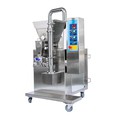
As an ice cream filler supplier, I've encountered numerous challenges and inquiries from our customers over the years. One of the most common issues that ice cream producers face is the ice cream filler getting too hard in the freezer. This problem can lead to a range of difficulties, from inconsistent filling to equipment damage. In this blog post, I'll share some scientific and practical strategies to prevent this issue and ensure the smooth operation of your ice cream production line.
The Science Behind Ice Cream Hardening in the Freezer
Before we delve into the solutions, it's essential to understand why ice cream filler hardens in the freezer. Ice cream is a complex mixture of water, milk, sugar, fat, and air. When placed in the freezer, the water in the ice cream begins to freeze, forming ice crystals. The rate of ice crystal formation and the size of these crystals depend on several factors, including the freezing temperature, the composition of the ice cream, and the presence of stabilizers and emulsifiers.
A lower freezing temperature generally leads to faster ice crystal formation and smaller ice crystals, which can result in a smoother texture. However, if the ice cream is frozen too quickly or at a very low temperature, the ice crystals can become too small and compact, causing the ice cream to become hard and difficult to work with. Additionally, the composition of the ice cream, such as the amount of sugar and fat, can affect its freezing point and the rate of ice crystal formation.
Strategies to Prevent Ice Cream Filler from Getting Too Hard
1. Optimize the Freezing Temperature
One of the most effective ways to prevent ice cream filler from getting too hard in the freezer is to optimize the freezing temperature. Most ice cream producers store their ice cream at a temperature between -18°C and -20°C (-0.4°F and -4°F). This temperature range allows the ice cream to maintain a smooth texture while preventing it from becoming too soft or too hard.
It's important to note that the ideal freezing temperature may vary depending on the specific type of ice cream and the equipment used. For example, some ice creams with a higher fat content may require a slightly higher freezing temperature to prevent them from becoming too hard. Therefore, it's recommended to conduct some tests to determine the optimal freezing temperature for your ice cream filler.
2. Adjust the Composition of the Ice Cream
The composition of the ice cream can also have a significant impact on its hardness in the freezer. As mentioned earlier, sugar and fat play a crucial role in determining the freezing point and the rate of ice crystal formation. By adjusting the amount of sugar and fat in the ice cream, you can control its hardness and texture.
Increasing the sugar content can lower the freezing point of the ice cream, making it less likely to become too hard in the freezer. However, too much sugar can also make the ice cream too sweet and affect its flavor. Therefore, it's important to find the right balance. Similarly, increasing the fat content can also improve the texture of the ice cream and prevent it from becoming too hard. However, high-fat ice creams may require more careful handling and storage to prevent them from spoiling.
3. Use Stabilizers and Emulsifiers
Stabilizers and emulsifiers are commonly used in ice cream production to improve its texture, stability, and shelf life. These additives can help prevent ice crystal formation and reduce the hardness of the ice cream in the freezer.
Stabilizers, such as carrageenan, guar gum, and xanthan gum, work by binding to the water molecules in the ice cream, preventing them from forming large ice crystals. Emulsifiers, such as lecithin, help to disperse the fat droplets in the ice cream, preventing them from coalescing and forming a hard layer.
When using stabilizers and emulsifiers, it's important to follow the manufacturer's instructions carefully and use the appropriate amount. Too much of these additives can affect the flavor and texture of the ice cream, while too little may not provide the desired results.
4. Choose the Right Ice Cream Filling Machine
The type of ice cream filling machine you use can also have an impact on the hardness of the ice cream filler in the freezer. At our company, we offer a range of high-quality ice cream filling machines, including the B10 High Speed Ice Cream Cup Filling and Sealing Machine, the A6 Ice Cream Cup Filling and Sealing Machine, and the Special Ice Cream Cup Filling and Sealing Machine.
These machines are designed to handle ice cream filler at various temperatures and viscosities, ensuring consistent filling and sealing. They also feature advanced technology and precision engineering to minimize the risk of ice cream hardening in the freezer.
5. Proper Storage and Handling
Proper storage and handling of the ice cream filler are essential to prevent it from getting too hard in the freezer. Here are some tips to keep in mind:
- Avoid temperature fluctuations: Fluctuations in temperature can cause the ice cream to melt and refreeze, leading to the formation of large ice crystals and a harder texture. Therefore, it's important to keep the freezer temperature as stable as possible.
- Use insulated containers: Insulated containers can help to maintain the temperature of the ice cream filler and prevent it from getting too cold or too warm.
- Rotate the stock: To ensure that the ice cream filler is used in a timely manner, it's recommended to rotate the stock regularly. This will prevent the ice cream from sitting in the freezer for too long and becoming too hard.
Conclusion
Preventing ice cream filler from getting too hard in the freezer is a crucial aspect of ice cream production. By understanding the science behind ice cream hardening and implementing the strategies outlined in this blog post, you can ensure the smooth operation of your ice cream production line and produce high-quality ice cream products.
If you're looking for a reliable ice cream filler supplier or have any questions about our ice cream filling machines, please don't hesitate to contact us. We're here to help you find the best solutions for your ice cream production needs.


References
- Marshall, R. T., & Arbuckle, W. S. (2005). Ice Cream (6th ed.). Kluwer Academic/Plenum Publishers.
- Goff, H. D., & Hartel, R. W. (2013). Ice Cream (7th ed.). Springer.
- Clark, S. (2017). The Science of Ice Cream. Royal Society of Chemistry.