


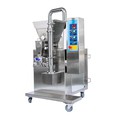
As a seasoned supplier of ice cream freezers, I've witnessed firsthand the magic that happens when a simple mixture of milk, cream, sugar, and flavorings transforms into the creamy, delicious treat we all love - ice cream. But have you ever wondered how an ice cream freezer works its freezing magic? In this blog post, I'll delve into the fascinating freezing mechanism of an ice cream freezer, exploring the science behind the process and how our state-of-the-art freezers, such as the A1200L Industrial Automatic and Continuous Freezer, A600L Automatic and Continuous Hard Ice Cream Machine, and A50L Automatic and Continuous Commercial Ice Cream Machine, ensure the perfect freeze every time.


The Basics of Freezing
At its core, the process of making ice cream is all about freezing a liquid mixture into a semi-solid state. But it's not as simple as just sticking the mixture in a freezer. To create the smooth, creamy texture that we associate with ice cream, the freezing process needs to be carefully controlled. This involves two key factors: temperature and agitation.
Temperature
The first step in the freezing process is to lower the temperature of the ice cream mixture below its freezing point. The freezing point of a liquid is the temperature at which it changes from a liquid to a solid. For pure water, this is 0°C (32°F). However, the ice cream mixture contains other ingredients such as sugar, milk, and cream, which lower the freezing point. The exact freezing point of the mixture depends on its composition, but it's typically around -3°C to -5°C (27°F to 23°F).
To achieve this low temperature, ice cream freezers use a refrigerant system. A refrigerant is a substance that can absorb heat from the ice cream mixture and transfer it to the outside environment. The most common refrigerants used in ice cream freezers are hydrofluorocarbons (HFCs) and hydrochlorofluorocarbons (HCFCs). These refrigerants have excellent heat transfer properties and are relatively safe to use.
The refrigerant system in an ice cream freezer consists of four main components: a compressor, a condenser, an expansion valve, and an evaporator. The compressor compresses the refrigerant gas, increasing its pressure and temperature. The hot, high-pressure gas then flows into the condenser, where it releases heat to the outside environment and condenses into a liquid. The liquid refrigerant then passes through the expansion valve, which reduces its pressure and temperature. Finally, the cold, low-pressure refrigerant enters the evaporator, where it absorbs heat from the ice cream mixture and evaporates back into a gas. This cycle repeats continuously, keeping the ice cream mixture at the desired temperature.
Agitation
In addition to lowering the temperature, the ice cream mixture also needs to be agitated during the freezing process. Agitation helps to prevent the formation of large ice crystals, which can give the ice cream a gritty texture. Instead, it promotes the formation of small, uniform ice crystals, resulting in a smooth, creamy texture.
There are two main types of agitation used in ice cream freezers: continuous and batch. Continuous freezers, such as our A1200L Industrial Automatic and Continuous Freezer and A600L Automatic and Continuous Hard Ice Cream Machine, use a rotating dasher or scraper to agitate the ice cream mixture as it flows through the freezer. This ensures that the mixture is constantly being mixed and that the ice crystals are kept small.
Batch freezers, on the other hand, freeze the ice cream mixture in batches. The mixture is placed in a container, and a rotating dasher or paddle agitates the mixture as it freezes. Batch freezers are typically used for small-scale production or for making artisanal ice cream. Our A50L Automatic and Continuous Commercial Ice Cream Machine is a versatile machine that can be used for both batch and continuous production.
The Freezing Process in Detail
Now that we've covered the basics of temperature and agitation, let's take a closer look at the freezing process in an ice cream freezer.
Preparing the Mixture
Before the ice cream mixture can be frozen, it needs to be prepared. This involves combining the ingredients, such as milk, cream, sugar, and flavorings, and heating the mixture to a specific temperature to pasteurize it. Pasteurization helps to kill any harmful bacteria in the mixture and ensures that the ice cream is safe to eat.
After pasteurization, the mixture is cooled to a temperature of around 4°C (39°F) and then aged for several hours. Aging helps to improve the texture and flavor of the ice cream by allowing the proteins in the milk and cream to denature and form a network that traps the fat globules. This results in a smoother, creamier texture.
Filling the Freezer
Once the ice cream mixture is prepared, it's ready to be filled into the freezer. In a continuous freezer, the mixture is pumped into the freezer through an inlet pipe. The mixture then flows through the evaporator, where it is cooled and agitated by the rotating dasher or scraper. As the mixture freezes, it becomes thicker and more viscous.
In a batch freezer, the mixture is poured into a container, and the dasher or paddle is inserted into the mixture. The container is then placed in the freezer, and the dasher or paddle is rotated to agitate the mixture as it freezes.
Freezing and Churning
As the ice cream mixture passes through the freezer, it is subjected to both low temperature and agitation. The cold refrigerant in the evaporator absorbs heat from the mixture, causing it to freeze. At the same time, the rotating dasher or scraper agitates the mixture, preventing the formation of large ice crystals and promoting the formation of small, uniform ice crystals.
The freezing process typically takes several minutes, depending on the type of freezer and the volume of the mixture. During this time, the ice cream mixture undergoes a phase change from a liquid to a semi-solid state. The semi-solid ice cream is then discharged from the freezer through an outlet pipe.
Hardening
After the ice cream is discharged from the freezer, it is still relatively soft and needs to be hardened further. Hardening involves placing the ice cream in a freezer at a temperature of around -18°C (0°F) for several hours. This allows the ice cream to firm up and develop its final texture and flavor.
Factors Affecting the Freezing Process
Several factors can affect the freezing process in an ice cream freezer, including the composition of the mixture, the temperature of the mixture, the speed of the dasher or scraper, and the type of freezer.
Composition of the Mixture
The composition of the ice cream mixture can have a significant impact on the freezing process. For example, the amount of sugar in the mixture can affect its freezing point. A higher sugar content will lower the freezing point of the mixture, making it more difficult to freeze. On the other hand, a lower sugar content will raise the freezing point, resulting in a harder, icier texture.
The amount of fat in the mixture also affects the freezing process. Fat helps to give the ice cream a smooth, creamy texture by coating the ice crystals and preventing them from sticking together. A higher fat content will result in a richer, creamier ice cream, but it will also make the mixture more difficult to freeze.
Temperature of the Mixture
The temperature of the ice cream mixture when it enters the freezer can also affect the freezing process. If the mixture is too warm, it will take longer to freeze, and the ice cream may have a softer texture. On the other hand, if the mixture is too cold, it may freeze too quickly, resulting in a hard, icy texture.
To ensure the best results, it's important to cool the ice cream mixture to the recommended temperature before filling it into the freezer. This will help to ensure that the freezing process is efficient and that the ice cream has the desired texture and flavor.
Speed of the Dasher or Scraper
The speed of the dasher or scraper in the freezer can also affect the freezing process. A higher speed will result in more agitation, which can help to prevent the formation of large ice crystals and produce a smoother, creamier texture. However, if the speed is too high, it can also cause the ice cream to become over-aerated, resulting in a lighter, fluffier texture.
The optimal speed of the dasher or scraper depends on the type of freezer and the composition of the ice cream mixture. It's important to follow the manufacturer's recommendations for the speed settings to ensure the best results.
Type of Freezer
The type of freezer used can also have a significant impact on the freezing process. Continuous freezers are generally more efficient and can produce larger volumes of ice cream in a shorter amount of time. They are also better suited for large-scale production. Batch freezers, on the other hand, are more suitable for small-scale production or for making artisanal ice cream. They allow for more control over the freezing process and can produce ice cream with a more traditional, homemade flavor.
Conclusion
The freezing mechanism of an ice cream freezer is a complex process that involves both temperature control and agitation. By carefully controlling these factors, ice cream freezers can produce smooth, creamy ice cream with a consistent texture and flavor. At our company, we are committed to providing high-quality ice cream freezers that use the latest technology and innovation to ensure the perfect freeze every time. Our A1200L Industrial Automatic and Continuous Freezer, A600L Automatic and Continuous Hard Ice Cream Machine, and A50L Automatic and Continuous Commercial Ice Cream Machine are designed to meet the needs of both large-scale producers and small businesses.
If you're in the market for an ice cream freezer, we invite you to contact us to learn more about our products and how they can help you create the perfect ice cream. Our team of experts is always available to answer your questions and provide you with the information you need to make an informed decision. Whether you're a seasoned ice cream maker or just starting out, we're here to help you succeed.
References
- Ice Cream: Science and Technology, Second Edition by Robert T. Marshall, H. Douglas Goff, and Richard W. Hartel
- Dairy Processing Handbook by Tetra Pak
- Food Engineering and Dairy Technology by G. S. Vijayanand