


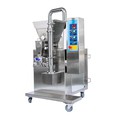
When it comes to the commercial ice cream production industry, the N300L continuous ice cream freezer stands out as a popular choice for many businesses. One of the most frequently asked questions by potential buyers is about its power consumption. As a supplier of the N300L continuous ice cream freezer, I am here to provide you with a detailed analysis of its power usage.
Understanding the Basics of Power Consumption
Power consumption is measured in kilowatt - hours (kWh). It represents the amount of electrical energy used by an appliance over a certain period. To calculate the power consumption of the N300L continuous ice cream freezer, we need to consider several factors, including the compressor power, the operation time, and the efficiency of the machine.
The N300L continuous ice cream freezer is equipped with a high - performance compressor. The compressor is the heart of the freezer, responsible for cooling the ice cream mixture to the desired temperature. The power of the compressor in the N300L model is typically around 3 - 5 kilowatts (kW). However, this is just the rated power, which is the maximum power the compressor can consume under full - load conditions.
Factors Affecting Power Consumption
1. Operating Conditions
The power consumption of the N300L continuous ice cream freezer can vary significantly depending on the operating conditions. For example, if the ambient temperature is high, the compressor has to work harder to maintain the low temperature inside the freezer. This means that in hot summer months, the power consumption will be higher compared to cooler seasons.
Let's assume that in an environment with an ambient temperature of 25°C, the compressor of the N300L freezer runs at about 70% of its rated power on average. If the rated power of the compressor is 4 kW, then the average power consumption during operation is 4 kW×0.7 = 2.8 kW.
2. Production Volume
The amount of ice cream produced also affects power consumption. When the freezer is running at full capacity, continuously churning out ice cream, the compressor will be under a heavier load, consuming more power. On the other hand, if the production volume is low, the compressor may cycle on and off more frequently, and the overall power consumption will be reduced.
For instance, if a business uses the N300L continuous ice cream freezer to produce 200 liters of ice cream per day, the power consumption will be different from a business that produces 300 liters per day. The more ice cream produced, the longer the compressor has to run, and the more power it will consume.
3. Maintenance and Efficiency
Proper maintenance of the N300L continuous ice cream freezer is crucial for reducing power consumption. A well - maintained freezer with clean condensers, proper refrigerant levels, and well - lubricated components will operate more efficiently. Over time, if the freezer is not maintained properly, the compressor may have to work harder to achieve the same cooling effect, leading to increased power consumption.
Calculating Power Consumption
To calculate the daily power consumption of the N300L continuous ice cream freezer, we need to know the average power consumption per hour and the number of operating hours per day.
Let's assume that the average power consumption of the N300L freezer is 2.5 kW, and it operates for 8 hours a day. Then the daily power consumption is 2.5 kW×8 hours = 20 kWh.
If we want to calculate the monthly power consumption, assuming 30 days in a month, it will be 20 kWh×30 days = 600 kWh.
Comparison with Other Models
It's also interesting to compare the power consumption of the N300L continuous ice cream freezer with other models in our product line. For example, the N1200L Continuous Ice Cream Freezer has a larger capacity, which means it is equipped with a more powerful compressor. The rated power of the compressor in the N1200L model can be around 8 - 10 kW. As a result, its power consumption will be higher compared to the N300L model, especially when running at full capacity.

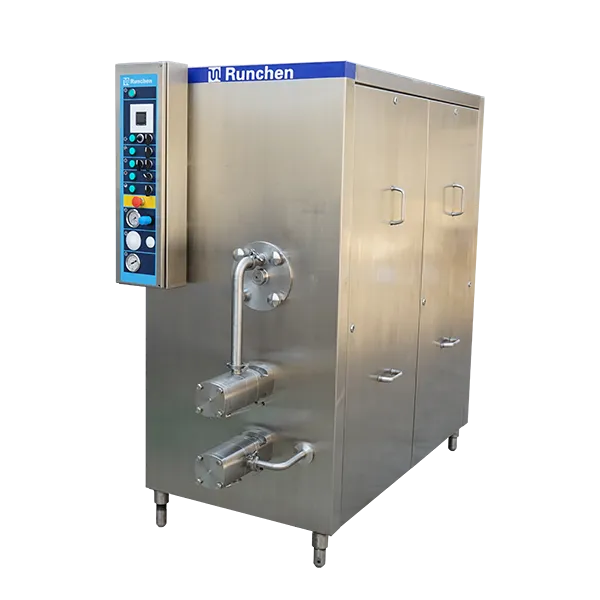
Another model, the N1000L Continuous Ice Cream Freezer, has a power consumption that lies between the N300L and the N1200L models. Its compressor power is typically around 6 - 8 kW, depending on the specific configuration.
The A1000L Automatic and Continuous Ice Cream Freezer is an automatic model with advanced features. While it offers high - efficiency production, its power consumption is also influenced by the automation systems in addition to the compressor power.
Cost Considerations
Power consumption directly translates into electricity costs. In most regions, the cost of electricity is measured in dollars per kilowatt - hour. Let's assume that the cost of electricity is $0.15 per kWh. Based on our previous calculation of the monthly power consumption of the N300L continuous ice cream freezer (600 kWh), the monthly electricity cost will be 600 kWh×$0.15/kWh = $90.
This cost may seem significant, but it's important to consider the long - term benefits of using the N300L continuous ice cream freezer. It can produce high - quality ice cream in large quantities, which can generate substantial revenue for your business.
Energy - Saving Tips
As a supplier, we also want to help our customers reduce their power consumption and save on electricity costs. Here are some energy - saving tips for using the N300L continuous ice cream freezer:
- Proper Placement: Place the freezer in a well - ventilated area away from direct sunlight and heat sources. This will reduce the heat load on the compressor and lower power consumption.
- Regular Maintenance: Clean the condensers regularly to ensure efficient heat transfer. Check the refrigerant levels and lubricate the moving parts as recommended in the user manual.
- Optimize Production Schedule: Plan your ice cream production in advance to avoid unnecessary running of the freezer. If possible, run the freezer during off - peak electricity hours when the cost of electricity is lower.
Conclusion
In conclusion, the power consumption of the N300L continuous ice cream freezer is influenced by various factors such as operating conditions, production volume, and maintenance. On average, it consumes around 20 - 30 kWh per day, depending on the specific usage. While the power consumption is an important consideration, the high - quality ice cream production and the potential revenue it can generate make the N300L continuous ice cream freezer a valuable investment for any commercial ice cream business.
If you are interested in purchasing the N300L continuous ice cream freezer or have more questions about its power consumption and other features, please feel free to contact us. We are more than happy to provide you with detailed information and assist you in making the right decision for your business.
References
- "Commercial Ice Cream Freezers: Technical Manual", Manufacturer's Handbook
- "Energy Efficiency in Food Processing Equipment", Journal of Food Science and Technology