


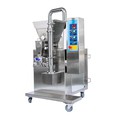
In the world of ice cream and dessert production, fruit feeders play a crucial role in enhancing the visual appeal and taste of the final product. However, one common issue that manufacturers may encounter is when the fruit feeder is too small for the fruit. This situation can lead to a variety of problems, but with the right understanding and solutions, it can be effectively addressed. As a fruit feeder supplier, I have witnessed firsthand the challenges and opportunities associated with this issue, and I'm here to share some insights.
Understanding the Consequences of a Small Fruit Feeder
When a fruit feeder is too small for the fruit, the most immediate consequence is a feeding problem. Larger fruits simply won't fit through the feeder's opening, which can disrupt the production process. This can lead to downtime as workers try to either cut the fruit into smaller pieces or adjust the feeder, both of which are time - consuming and can reduce overall productivity.
Moreover, cutting the fruit into smaller pieces to fit the feeder may not be the best solution from a quality perspective. Many consumers appreciate seeing whole or large pieces of fruit in their ice cream or desserts. Smaller, chopped fruits may not have the same visual impact and can also affect the texture and flavor experience.
Another problem is the potential for jamming. If a large piece of fruit is forced into a small feeder, it can get stuck, causing the feeder to malfunction. This can lead to costly repairs and further production delays. Additionally, jamming can put stress on the feeder's components, reducing its lifespan and increasing the need for maintenance.
Causes of a Mismatch between Fruit and Feeder
There are several reasons why a fruit feeder may be too small for the fruit. One common cause is improper planning during the purchasing process. Manufacturers may not have considered the size of the fruits they plan to use in their products. For example, if a manufacturer intends to use large strawberries or whole peaches but purchases a feeder designed for small berries, a mismatch will occur.
Another factor is the variety of fruits. Different regions may have access to different sizes and types of fruits. A feeder that works well with fruits from one area may not be suitable for fruits from another. Additionally, seasonal variations can also affect fruit size. Fruits may be larger or smaller depending on the time of year, and a feeder that is appropriate for off - season fruits may not be adequate during peak seasons.
Solutions for a Small Fruit Feeder
As a fruit feeder supplier, I offer several solutions to address the issue of a small fruit feeder. One option is to upgrade to a larger feeder. Our WF4000 Ice Cream Fruit Feeder is designed to handle a wide range of fruit sizes, including larger pieces. It has a spacious feeding chamber and a powerful mechanism that can smoothly feed even the biggest fruits into the ice cream or dessert production line.
Another solution is to modify the existing feeder. In some cases, it may be possible to widen the opening or adjust the internal components of the feeder to accommodate larger fruits. Our technical team can provide on - site consultation and modification services to ensure that your feeder can handle the fruits you need.
If upgrading or modifying the feeder is not an option, we also offer a range of fruit pre - processing equipment. This can include fruit cutters and slicers that can prepare the fruits in a way that they can fit through the existing feeder. For example, our FF4000 Ice Cream Fruit Feeder can be paired with a suitable fruit cutter to ensure a seamless production process.
Choosing the Right Fruit Feeder
To avoid the problem of a small fruit feeder in the first place, it's essential to choose the right feeder for your needs. When selecting a fruit feeder, consider the types and sizes of fruits you plan to use. Research the average size of the fruits in your region and during different seasons.
It's also important to look at the feeder's capacity and throughput. A feeder with a higher capacity can handle larger fruits and a greater volume of fruit, which can be beneficial for large - scale production. Additionally, consider the feeder's ease of use and maintenance. A feeder that is easy to clean and maintain will have a longer lifespan and reduce the risk of breakdowns.
Our FF2000 Ice Cream Fruit Feeder is a popular choice for many manufacturers. It offers a good balance between size, capacity, and affordability. It can handle a variety of fruit sizes and is designed for easy operation and maintenance.
Conclusion
The issue of a fruit feeder being too small for the fruit is a common but solvable problem in the ice cream and dessert production industry. By understanding the consequences, causes, and solutions, manufacturers can make informed decisions to ensure a smooth and efficient production process.


As a fruit feeder supplier, we are committed to providing high - quality products and excellent customer service. We have a wide range of fruit feeders to meet the diverse needs of our customers. Whether you need a feeder for small berries or large whole fruits, we have the right solution for you.
If you are facing issues with your current fruit feeder or are in the market for a new one, we encourage you to contact us for a consultation. Our team of experts can help you choose the best feeder for your specific requirements and provide support throughout the purchasing and installation process. Don't let a small feeder limit your dessert production. Let us help you find the perfect solution.
References
- "Ice Cream and Dessert Production Handbook"
- Industry reports on fruit feeder technology and trends