


As a supplier of the n600l continuous ice cream freezer, I am often asked about the heat dissipation method of this product. In this blog post, I will delve into the details of the heat dissipation mechanism of the n600l continuous ice cream freezer, explaining how it works to ensure optimal performance and reliability.
The Importance of Heat Dissipation in Ice Cream Freezers
Before we explore the specific heat dissipation method of the n600l, let's first understand why heat dissipation is crucial in ice cream freezers. Ice cream freezers are designed to rapidly cool and freeze the ice cream mixture to the desired temperature. During this process, a significant amount of heat is generated inside the freezer due to the compression of the refrigerant and the mechanical operation of the compressor. If this heat is not effectively dissipated, it can lead to a rise in temperature inside the freezer, which can negatively impact the quality of the ice cream and reduce the efficiency of the freezer.
Efficient heat dissipation is also essential for the longevity of the freezer's components. Excessive heat can cause premature wear and tear on the compressor, condenser, and other vital parts, leading to increased maintenance costs and a shorter lifespan for the freezer. Therefore, a reliable heat dissipation system is a key factor in ensuring the smooth operation and durability of an ice cream freezer.
Heat Dissipation Method of the n600l Continuous Ice Cream Freezer
The n600l continuous ice cream freezer employs a combination of air - cooled and liquid - cooled heat dissipation methods to effectively remove heat from the system.
Air - Cooled Heat Dissipation
The air - cooled heat dissipation system is an integral part of the n600l freezer. It consists of a condenser and a fan. The condenser is a heat exchanger that transfers the heat from the refrigerant to the surrounding air. When the hot refrigerant gas from the compressor enters the condenser, it passes through a series of coils. The fan blows air over these coils, accelerating the heat transfer process. As the air absorbs the heat from the refrigerant, the refrigerant cools down and condenses into a liquid state.
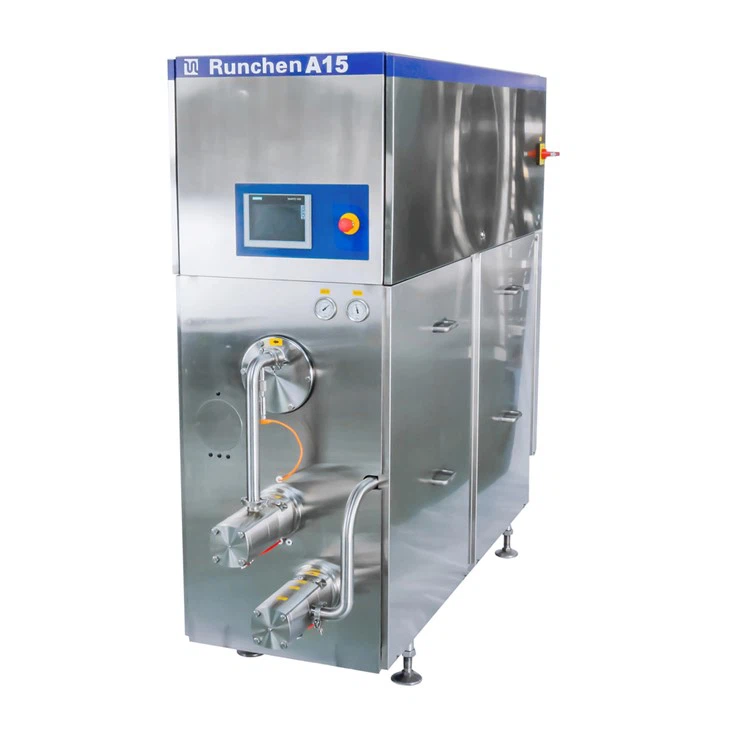

The advantage of air - cooled heat dissipation is its simplicity and cost - effectiveness. It requires less maintenance compared to liquid - cooled systems and is suitable for small to medium - sized ice cream freezers. In the n600l, the air - cooled system is designed to operate efficiently even in environments with relatively high ambient temperatures. The fan is carefully selected to provide sufficient airflow to the condenser, ensuring that the heat is dissipated quickly and effectively.
Liquid - Cooled Heat Dissipation
In addition to the air - cooled system, the n600l also features a liquid - cooled heat dissipation option. The liquid - cooled system uses a coolant, usually water or a water - glycol mixture, to absorb the heat from the refrigerant. The coolant circulates through a heat exchanger connected to the condenser. As the hot refrigerant passes through the condenser, the coolant absorbs the heat, and the heated coolant is then pumped to a radiator or a cooling tower, where the heat is released into the atmosphere.
The liquid - cooled system offers several advantages over the air - cooled system. It can dissipate heat more efficiently, especially in large - scale ice cream production where high heat loads are generated. Liquid - cooled systems are also less affected by ambient temperature fluctuations, making them more suitable for use in hot climates or in environments with poor ventilation. However, they are generally more complex and expensive to install and maintain compared to air - cooled systems.
Factors Affecting Heat Dissipation
Several factors can affect the heat dissipation performance of the n600l continuous ice cream freezer.
Ambient Temperature
The ambient temperature has a significant impact on the heat dissipation efficiency of the freezer. In hot environments, the air or liquid used for heat dissipation is already warm, which reduces its ability to absorb heat from the refrigerant. As a result, the freezer may have to work harder to maintain the desired temperature, leading to increased energy consumption and potential performance issues. To mitigate the effects of high ambient temperatures, it is recommended to install the freezer in a well - ventilated area or to use additional cooling equipment, such as air conditioners or fans.
Airflow
Proper airflow is crucial for the effective operation of the air - cooled heat dissipation system. If the condenser is blocked or if there is insufficient airflow around it, the heat transfer process will be hindered, and the temperature inside the freezer may rise. Therefore, it is important to ensure that the area around the freezer is clear of obstructions and that the fan is working properly. Regular cleaning of the condenser coils is also necessary to prevent the accumulation of dust and debris, which can reduce the airflow and heat transfer efficiency.
Coolant Quality and Flow Rate
In the liquid - cooled system, the quality and flow rate of the coolant are important factors. The coolant should be free of contaminants and have the appropriate chemical properties to ensure efficient heat transfer. A low flow rate of the coolant can also limit the heat dissipation capacity of the system. Regular checks and maintenance of the liquid - cooled system, including coolant level monitoring and pump inspection, are essential to ensure its proper operation.
Comparison with Other Ice Cream Freezers
When comparing the n600l continuous ice cream freezer with other models, its heat dissipation method offers several advantages. For example, compared to some smaller ice cream freezers that rely solely on air - cooled heat dissipation, the n600l's combination of air - cooled and liquid - cooled systems provides more flexibility and better performance in different operating conditions.
If you are interested in larger - scale ice cream production, you might also consider our A1200L Automatic and Continuous Ice Cream Freezer. This model is designed for high - volume production and features an advanced heat dissipation system to handle the increased heat loads. For those looking for a smaller, more compact option, our A50L Italian Gelato Hard Ice Cream Making Machine is a great choice. It uses an efficient air - cooled heat dissipation system to ensure reliable performance. And for commercial users with very high production demands, our A1500L Automatic and Continuous Commercial Ice Cream Machine offers a powerful and effective heat dissipation solution.
Conclusion
The heat dissipation method of the n600l continuous ice cream freezer is a well - designed combination of air - cooled and liquid - cooled systems that ensures efficient heat removal, optimal performance, and long - term reliability. By understanding the heat dissipation mechanism and the factors that affect it, users can take appropriate measures to maintain the freezer's performance and extend its lifespan.
If you are in the market for an ice cream freezer and are interested in learning more about the n600l or our other products, please do not hesitate to contact us for more information and to discuss your specific requirements. We are committed to providing high - quality ice cream freezers and excellent customer service to meet your needs.
References
- Ice Cream Freezer Technology Handbook, Published by Industry Press
- Research on Heat Dissipation in Commercial Refrigeration Equipment, Journal of Refrigeration Science